Shijro Get the app

Family tree and family history app

Every family has a story worth keeping.

Build your family tree, keep the family’s photos with everyone tagged, and record the stories in their own voices before they are lost. Shijro is a private place for the people who belong to it.

Get it on Google Play See the app

Free on Android, coming to iPhone. A made-up family is one tap from the sign-in screen, so you can look around before you sign up.

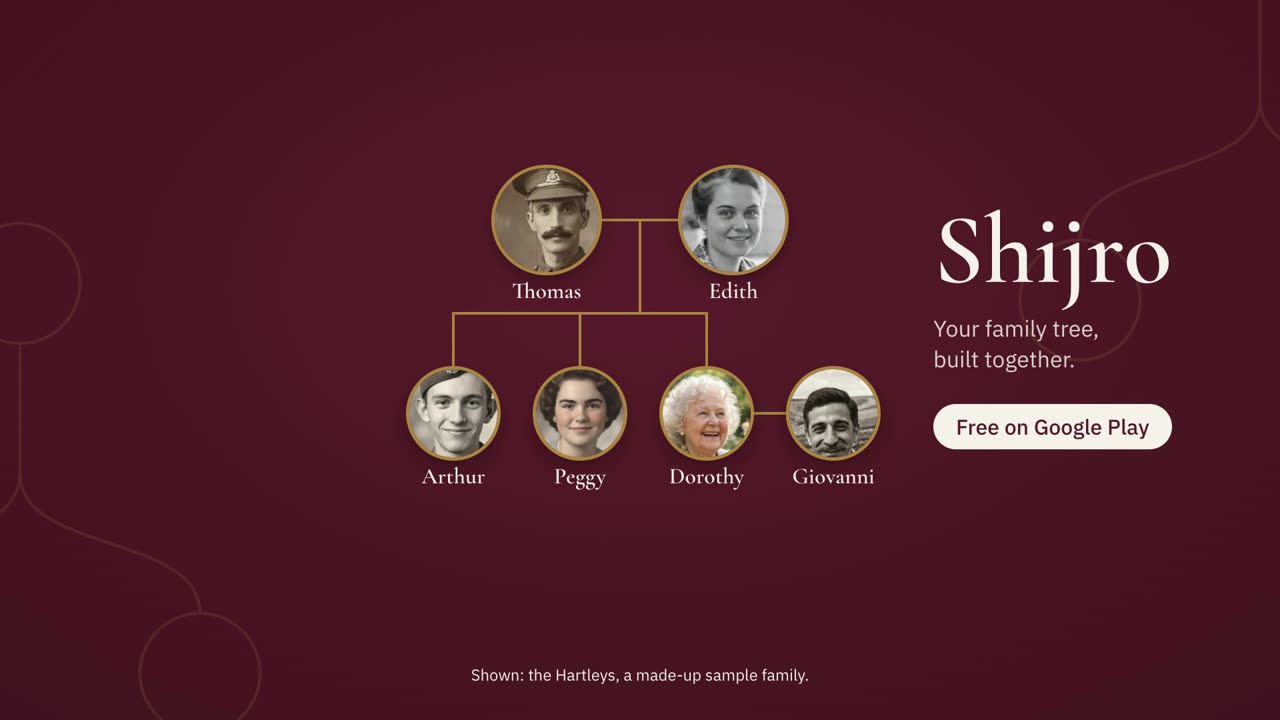
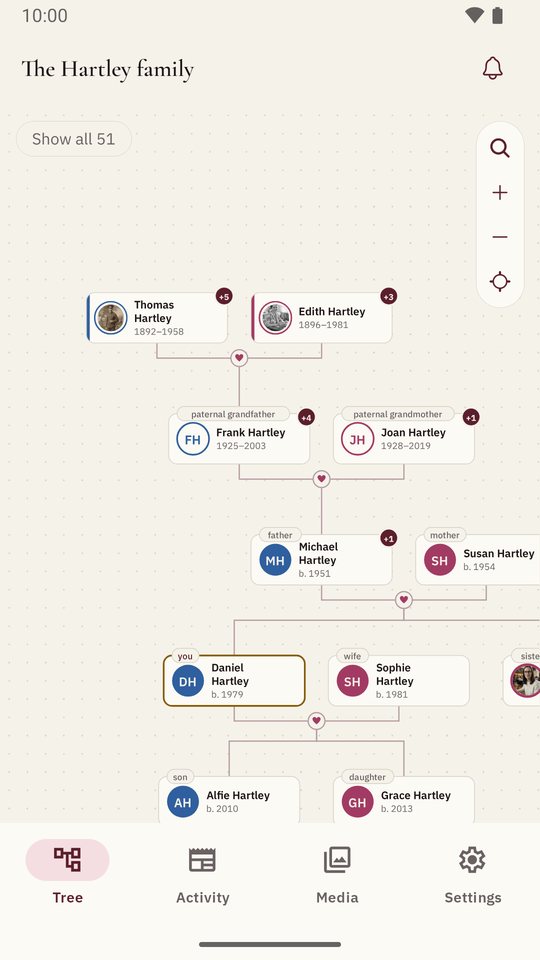
The Hartley family, a made-up family, drawn as a tree in Shijro across four generations

What it does

Everything your family knows, in one place

A family tree, drawn

Generations laid out as a tree, couples joined side by side and brothers and sisters oldest first. Pan and pinch, and more relatives appear as you zoom out. Tap someone and ask how they are related to anyone else: maternal aunt, third cousin, great-great-grandson.

Stories in their own voice

Tell a story by talking, or write it down, about yourself or anyone in the tree. Each one takes its place in that person’s life, and recordings play with the words following the voice, and the family can like them.

Ask your grandparents while you can

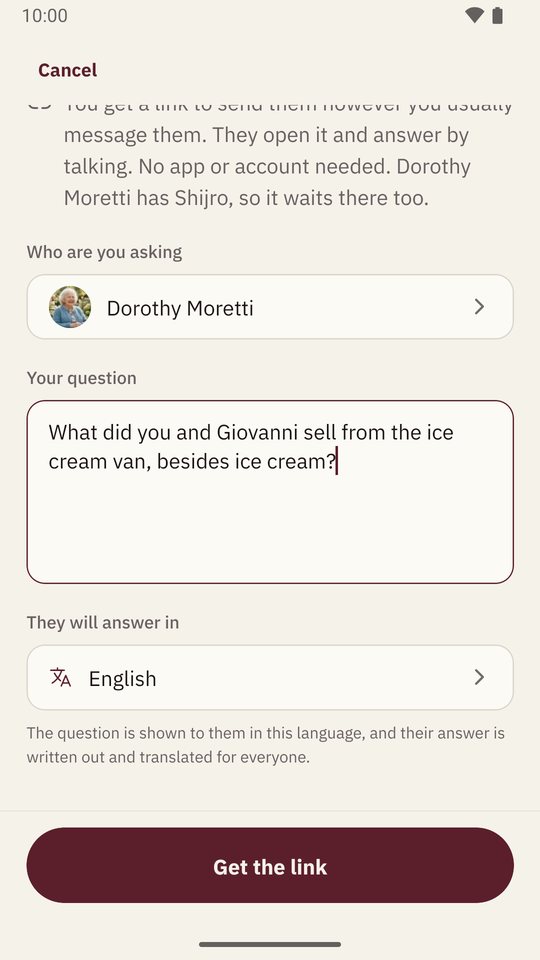
Send a relative a question: what was your first job, who is everyone in this photo? They answer by talking, in the app or from a link with nothing to install, and the answer becomes a story in their voice. An answer from a link waits until you let it in.

In their language, and in yours

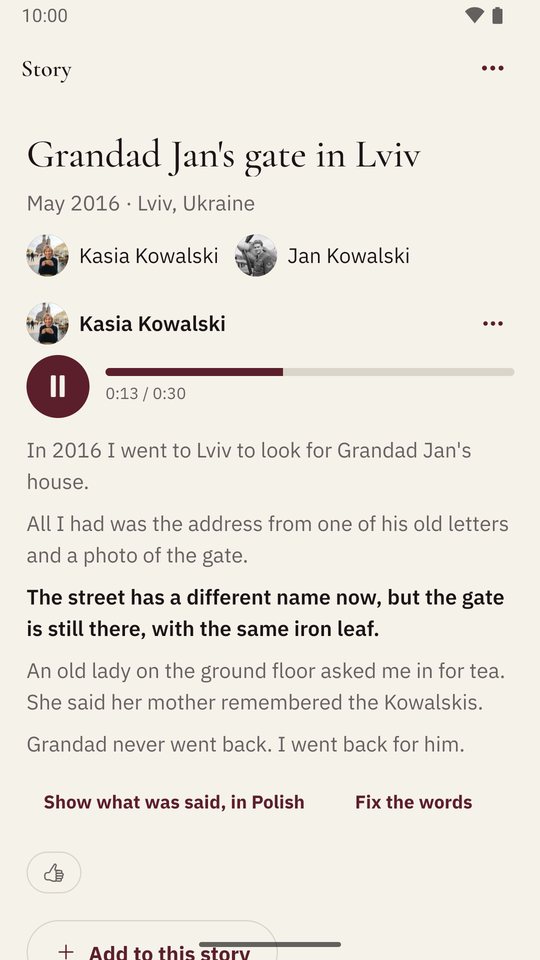
Recordings are written out in the language they were spoken in and translated into yours, so a grandchild who never learned it can still follow along. If the words get a name wrong, anyone in the family can fix it. The app itself is in 19 languages, and follows the language of each person's phone.

Family photos, with everyone tagged

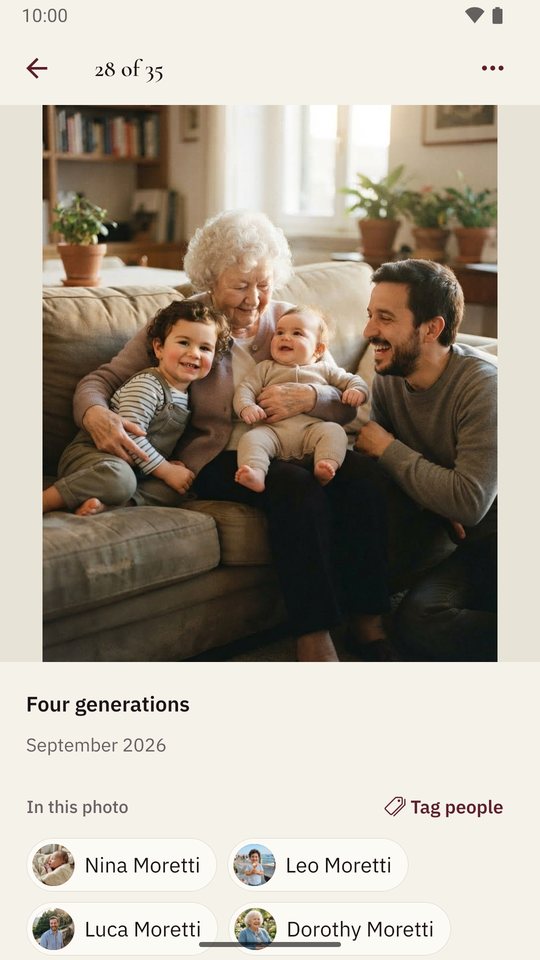
Add a wedding or a school photo once, tag who is in it, and it shows up on each of their pages. The album sorts itself by decade. Talk over an old photo and the story stays with it.

A page for every life

Their stories in order, between the day they were born, the day they married and the children who came after. Dates can be exact, just a year or unknown. For those who have died: where they rest, a pin for the grave and a photo of the headstone.

Invite relatives with a link

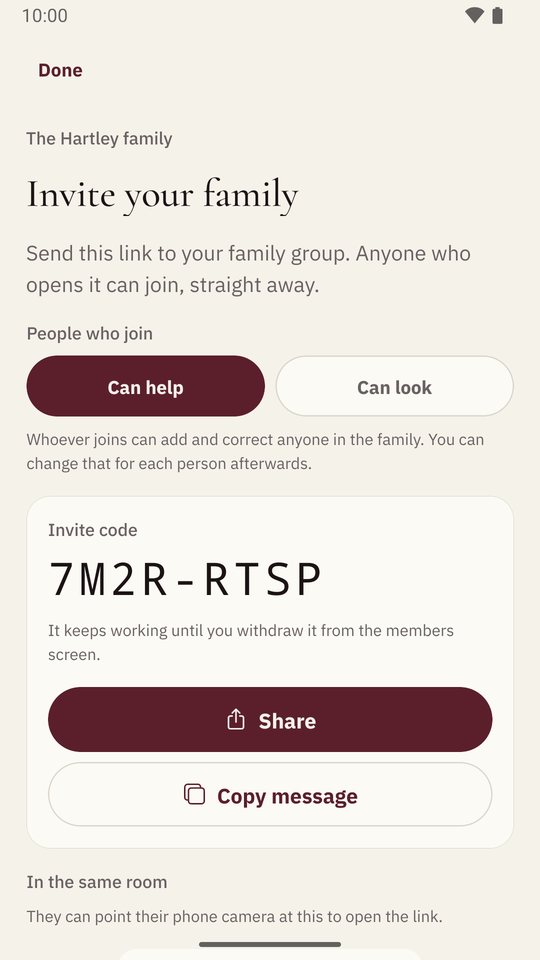
Send a link to the family group chat, or show a QR code across the room. Choose whether they can help build the tree or only look. The app tells you when a relative answers, asks you something or adds a photo of you.

Private, free, no ads

A family is seen only by the people you invite. No advertisements, and your family’s data is never sold. Anything deleted waits 30 days and can be put back, and the whole family can be downloaded whenever you like.

Everything Shijro does

In under a minute

See Shijro in action

A look inside

Stories you can read and hear

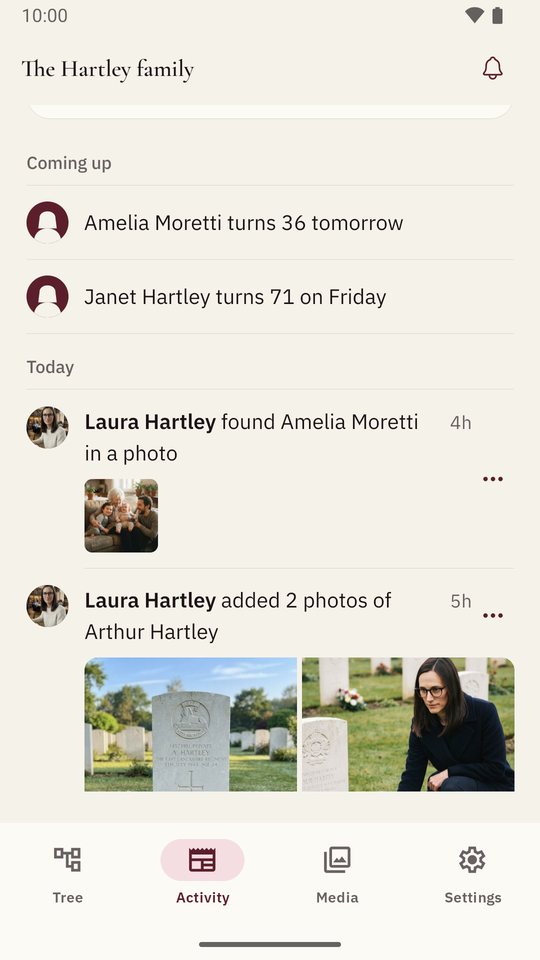
A family's Activity in Shijro: birthdays coming up, and the photos relatives added today
See what the family added this week.
The Hartley family drawn as a tree, four generations with couples side by side
The tree around any person.
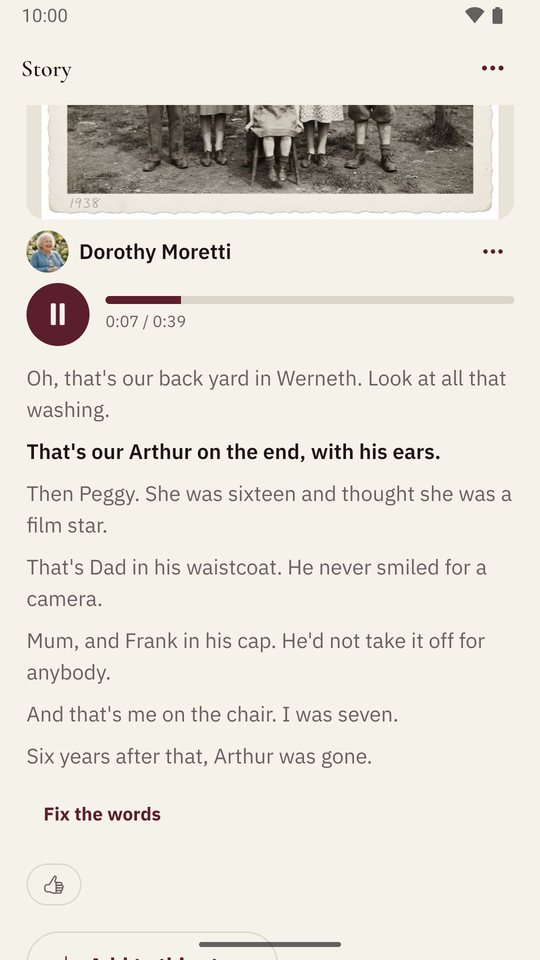
Dorothy Moretti naming everyone in an old photo, the words following her voice
Stories in their own voice.
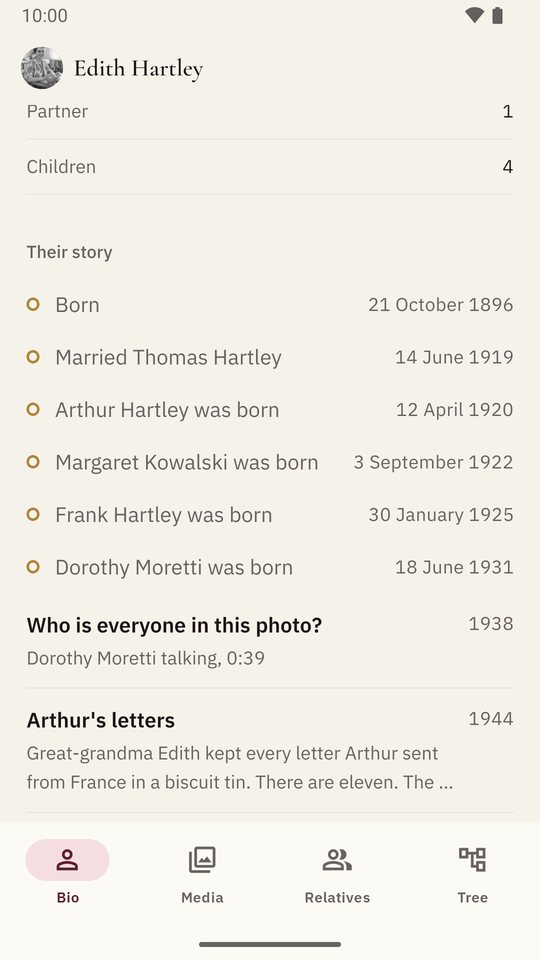
Edith Hartley's life in order: born, married, her four children, two stories and the day she died
A life, in order.
Asking Dorothy Moretti a question, to be answered in English
Ask before it is too late.
Kasia Kowalski's recording in Polish, written out and translated into English
Spoken in Polish, read in English.
A photo of four generations with everyone in it tagged
Who is in each photo.
Inviting the family with a link and a code
Invite with a link or a code.

Why I built Shijro

A family history that was lost, and children who can’t read it

My father-in-law’s great-grandfather spent years writing our family’s history by hand: dates of birth, children, the stories behind the names. After he died it passed from house to house until nobody knew where the original was. A single photocopy is all that survives. My own children can’t read the language it is written in, and find it hard to talk to their grandparents in theirs. Shijro is my answer to both.

Read the story

Where the name comes from

A shajra, drawn

Shijro takes its name from the shajra (شجرہ), the drawn family tree of South Asian and Islamic tradition. A shajra-e-nasab is drawn with gold-rimmed medallions strung down a page on fine lines, a name inside each one, painted in gold leaf on deep red and ultramarine grounds, the most precious pigments a workshop had.

The mark is that, reduced to its smallest unit. One gold-rimmed roundel, and two fine lines descending to two more, on deep red.

Look at the two below it. One is filled and one is an open ring, and that is the app’s own grammar: a filled roundel is someone living, an open one someone who has died. The same rule holds for every face in your tree. So the icon already says something in the language the app speaks, and the gold in it is the same gold that lights the line between two relatives when you ask how they are related.

What’s new

What’s new in Shijro 3.0: your language, and a family that opens on its tree

Shijro 3.0 is in 19 languages, opens straight on your family tree, colours and labels your close relatives, and lets you add a parent, partner, child or sibling from anyone on the tree.

Read the post Every release

Questions

Before you start

Is Shijro free?

Yes. Building your family tree, adding photos, documents and recordings, and inviting relatives are free, with no advertisements. Each family has room for 2,000 people and 100 MB of photos, documents and recordings, and as many relatives as want to join. A family that needs more room can add storage, by the month or the year, and buy more AI for writing out and translating recordings once its own is used. Nothing else is sold.

Who can see my family tree?

Only the people you invite. There is no setting that makes a family public, and you decide whether each relative can add and correct things or only look.

What if Shijro shuts down?

Anyone in a family can download everything it holds, at any time, from the family’s Settings: the tree, a page for each person, stories, photos, recordings with their words, and documents. It opens in any web browser with no app and no internet, so the family keeps it whatever happens to Shijro.

Do my grandparents need the app to answer?

No. Send them a question as a link, over WhatsApp or any chat. They open it, tap and talk, with nothing to install. Their answer waits until someone in the family lets it in, and nothing they say is written out or translated before then.

Which languages can recordings be in?

Around sixty languages. A recording is written out in the language it was spoken in and translated into the language each reader chooses. Recordings are written out and translated by AI models through our cloud provider, for your family only, and are never used to train them.

Which languages is Shijro in?

English, French, German, Spanish, Portuguese, Italian, Polish, Ukrainian, Russian, Turkish, Arabic, Persian, Urdu, Sindhi, Hindi, Bengali, Indonesian, Vietnamese and Thai. It follows your phone's language, or you can choose one in Settings. Spain and Portugal get their own words where they differ from Latin America and Brazil.

Can I add a photo with many people in it?

Yes. Photos belong to the family, so a group photo is added once and everyone in it is tagged. It then appears on each of their pages.

How is this different from Ancestry or FamilySearch?

Shijro is not a records database and does not match you with strangers. It is a private place for your own family to write down what it knows, with the photos and stories that go with it.

Is there an iPhone app?

Shijro is on Android now. The iPhone version is on its way.
Get started

Start with the people you remember.

Add yourself, your parents and grandparents, then invite the relatives who know the rest.

Get it on Google Play