Posts ·
What’s new in Shijro 2.2: an easier tree to read, and relatives named properly
Shijro 2.2 is out on Google Play. Most of this release is about the family tree: making it easier to read, and making it tell you more about the people in it.
Couples and siblings no longer look the same
In a big tree, a husband and wife looked exactly like a brother and sister: two cards side by side, and you couldn’t tell which was which. Now a couple sits closer together, joined by a double line, with one line down to their children. Brothers and sisters are placed from oldest to youngest, so you can see the order of a family at a glance.
Big generations fit on the screen
A generation with many cousins used to run off the edge of the phone. Now a cousin’s husband or wife appears as a small name on the cousin’s card, and tapping it brings them into the tree. A small label in the corner says how many people aren’t drawn yet. It replaces the line of text that used to sit across the bottom of the screen.
A figure for people without a photo
Plenty of people in any family tree have no photo. They used to show their initials. Now they show a simple figure of a man or a woman, which makes the tree easier to scan before anyone has added photos.
Relatives named the way people say them
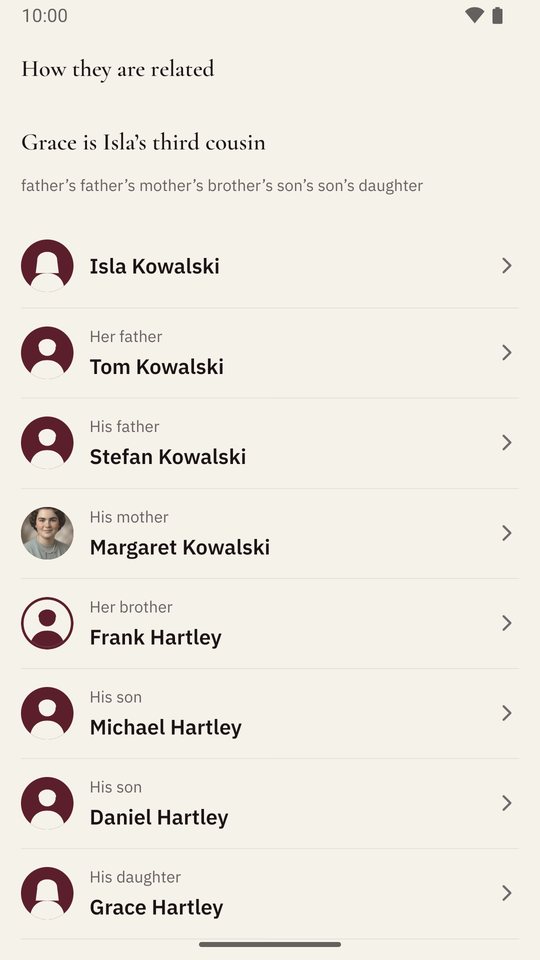
Shijro could already work out how two people were related, but it spelled the answer out as a chain, such as “father’s father’s mother’s brother’s son’s son’s daughter”. Nobody talks like that. Now it gives the name you would actually use: maternal aunt, paternal grandfather, half-sister, stepbrother, third cousin twice removed, even sister-in-law’s mother. The chain is still there underneath, as a list of people you can tap through.
There’s more about this on the how are we related page.
How everyone is related to you
Once you’ve said which person in the family you are, every relative’s page now says how they’re related to you. Tap it to see the path between you. On the tree, How related compares anyone with anyone else in the family, including people who aren’t drawn on screen yet.
Tablets and turning your phone
Shijro now rotates with your phone. On a tablet or an unfolded phone, screens sit in a column in the middle instead of stretching edge to edge, and photo grids fit more photos across.
Every change in this release, and in every earlier one, is in the changelog.